

Have you ever had a day where everything seemed completely manageable…until it suddenly wasn’t?
Maybe you handled work, errands, conversations, and noise just fine. You got through the day like you always do. But later (sometimes hours later) you crash.
You might feel irritable, exhausted, emotionally overwhelmed, or completely shut down. And it can be confusing because nothing dramatic happened in that moment.
For many late-diagnosed ADHD and autistic adults, this pattern is actually a common experience of sensory overload. Especially the type that builds slowly and shows up later.
Understanding delayed sensory overload can help explain why you often feel “fine” until you suddenly aren’t.
Table of Contents
ToggleWhat is Sensory Overload?
Sensory overload happens when your brain receives more sensory input than your nervous system can comfortable process.
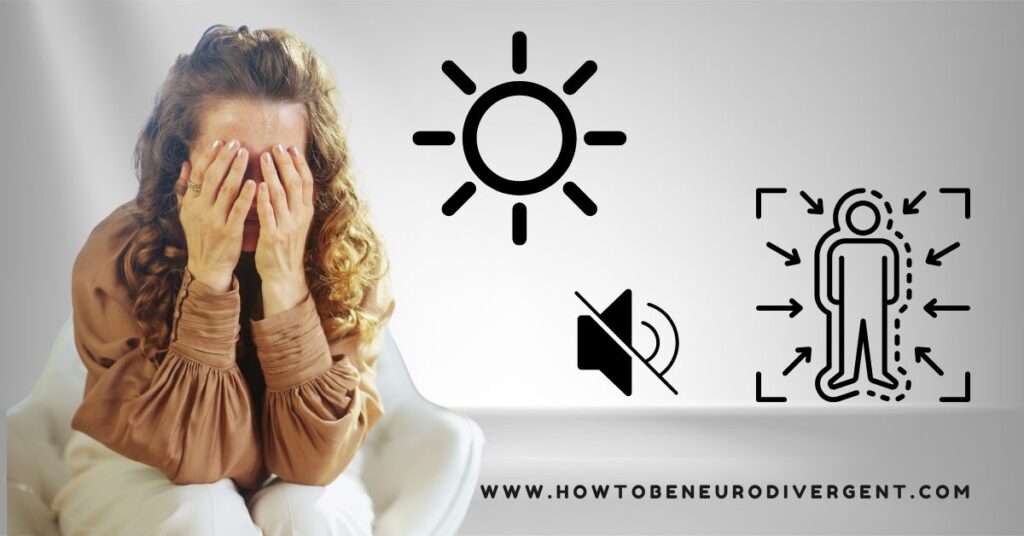
This input can come from many sources, including:
- Noise and overlapping conversations
- Bright light or screen exposure
- Crowded environments
- Visual clutter
- Social demands and masking
- Internal sensations like hunger, fatigue, or tension
When sensory input accumulates faster than your brain can regulate it, your nervous system becomes overwhelmed. That’s sensory overload.
But for many adults (especially those diagnosed later in life) sensory overload doesn’t always happen immediately.
Why Delayed Sensory Overload Happens
Many late-identified ADHD and autistic adults are skilled at pushing through discomfort.
You may have spent years learning to:
- Mask sensory distress in social settings
- Ignore early signs of overwhelm
- Override your body’s signals to meet expectations
- Stay “functional” in demanding environments
These coping strategies allow you to keep going longer than your nervous system naturally wants to.
But they come at a cost.
Instead of stopping when sensory strain begins, your body keeps compensating. Until, eventually, it runs out of capacity. That’s when sensory overload finally hits.
The "Fine Until Your Not" Experience
Delayed sensory overload often creates a confusing pattern.
You might:
- Handle a busy environment with no obvious issue
- Feel productive and capable during the day
- Appear calm and engaged in conversations
Then later, seemingly out of nowhere:
- You feel emotionally flooded
- You snap at someone you care about
- You become unusually tired or withdrawn
- You feel like your brain just shut off
This doesn’t mean you were actually “fine” earlier.
It often means your nervous system was quietly accumulating sensory input the entire time.
Signs Your Sensory Overload Is Delayed
Delayed sensory overload can look different from the immediate overwhelm many people expect. Some common signs include:
Evening Crashes
You hold it together all day and collapse at night (physically, mentally, or emotionally).
Irritability Without a Clear Cause
Small frustrations suddenly feel unbearable.
Decision Paralysis
After a full day, even simple choices can feel overwhelming.
Shutdown or Withdrawal
Instead of outward distress, you may become quiet, numb, or disconnected.
(Before we knew I was autistic, my family used to call my evening shutdowns “pumpkin time” because it was like Cinderella’s carriage turning back into a pumpkin).
Increased Sensitivity
Sounds, lights, or social interactions that were tolerable earlier now feel impossible.
(I was once brought to tears when my brother-in-law made a silly noise during a game night. I was mortified and had no logical explanation).

Why Late-Diagnosed Adults Experience This So Often
Delayed sensory overload is especially common for late-identified neurodivergent adults.
Without knowing your brain works differently, you may have built a life that constantly pushes past your sensory limits.
You may have learned to believe:
- Everyone finds environments this exhausting
- Being overwhelmed means you’re weak
- You just need better time management or discipline
In reality, many of these experiences are related to sensory overload, not personal failure.
Once you understand this, your reactions start to make much more sense.
Sensory Overload is About Capacity, Not Character
One of the most important things to understand about sensory overload is that it isn’t a reflection of your personality, motivation, or resilience.
It’s about nervous system capacity.
Your brain processes sensory input differently. That means environments that feel manageable to others may require significantly more effort for you to navigate.
When that effort accumulates, sensory overload becomes inevitable without adequate recovery or support.
Recognizing this isn’t giving yourself excuses. It’s giving yourself accurate information.
Learning to Recognize Your Early Signs
You won’t be able to eliminate sensory overload completely. Life will always include stimulation.
But increasing sensory awareness can help you notice earlier signs of strain.
Some early signals might include:
Tight shoulders or jaw
Difficulty concentrating
Feeling unusually restless or tense
Losing patience more quickly
Feeling mentally foggy
These are often the body’s first hints that sensory input is starting to pile up.
Responding earlier (even with small adjustments) can help prevent the delayed crash that so many adults experience.
Your System is Catching Up
If you’ve ever wondered why you seem to fall apart after holding it together all day, you’re not imagining things.
Delayed sensory overload is a real and common experience for many ADHD and autistic adults (especially those diagnosed later in life).
Understanding this pattern can replace confusion and self-criticism with self-awareness (which is far more helpful!).
And that awareness is often the first step toward creating a life that works with your nervous system rather than constantly pushing against it.
Want More Support for Late-Diagnosed Neurodivergent Adults?
If you’re learning about sensory overload, burnout, masking, or nervous system regulation for the first time, you’re not alone.
Join the How to Be ND newsletter for thoughtful insights and practical tools designed specifically for late-diagnosed ADHD and autistic adults.
You’ll receive:
Gentle strategies for navigating sensory overload
Education on burnout, masking, and regulation
Encouragement and perspective from a neurodivergent-affirming lens
👇Sign up below and be part of a community where your experiences finally make sense.
If you enjoyed this post, you might like this one 👉What is Sensory Awareness? A Guide for Late-Diagnosed ADHD & Autistic Adults
Thanks for listening, friends.

Disclaimer:
This post reflects my personal experiences and perspectives as a late-identified neurodivergent adult. While I aim to share helpful insights, I don’t speak on behalf of the entire ADHD or autistic community. Neurodivergence is diverse and individual—please interpret this content through the lens of your own needs and experiences. This article is not a substitute for professional or medical advice.