



Table of Contents
ToggleWhy the New Year Feels Different for Late-Diagnosed Neurodivergent Adults
For many late-diagnosed autistic and ADHD adults, the New Year comes with complicated feelings. While the world encourages fresh starts and bold resolutions, self-improvement for neurodivergent adults often looks and feels very different. Traditional approaches to growth often include rigid routines, willpower-based goals, and “new year, new you” pressure. This can trigger dread, burnout, or a sense of failure before January even begins.
In my teen and young adult years as an unidentified AuDHDer, the New Year brought on the feeling of so much pressure that emotional collapse was inevitable. I didn’t know what was happening or why. But I knew to expect it every year. Hours of crying and heaviness and feeling so tired and hopeless.
This post explores a gentler, more compassionate way to enter the new year. Instead of pushing yourself to become a new version of you, we’ll explore how to honor who you already are and make space for slow, sustainable change. A gentle approach to self-improvement can help you make more progress than setting goals that aren’t a good fit for you.
What Gentle Self-Improvement for Neurodivergent Adults Really Means
Letting Go of the “New Year, New You” Mindset
Neurodivergent adults often carry years of internalized pressure. We’re trying to mask, trying to be more “consistent,” trying to “fix” habits that were never character flaws in the first place. That’s why the “new year, new you” narrative can feel like a familiar trap.
Gentle self-improvement shifts the focus from fixing to supporting. It’s not about becoming different. It’s about becoming resourced.
Redefining Motivation and Growth Through a Neurodivergent Lens
ADHD and autistic motivation doesn’t always align with traditional expectations. Consistent routines, linear progress, and rigid goal don’t always match how our brains operate. Gentle self-improvement starts by acknowledging:
- Your energy comes in cycles.
- Your executive function fluctuates.
- Rest isn’t a reward. It’s regulation.
- Your sensory and emotional needs matter as much as productivity.
Growth becomes more possible when you build around your brain, not against it.
Why the End of the Year Is a Good Time for Reflection, Not Reinvention
Honoring the Season of Closing, Pausing, and Resting
Late-identified neurodivergent adults are often skilled at pushing through exhaustion, especially during late fall and early winter when sensory load, social demands, and transitions spike. Instead of setting ambitious goals on January 1, you might need:
- decompression
- rest from masking
- time to regulate
- space to process what the past year asked of you
Gentle endings help you enter the new year grounded. Not depleted.
Reflecting Without Self-Criticism
Reflection does not need to become a self-audit. Try asking questions that invite compassion.
- What did I survive that no one saw?
- What drained me? Why”
- What supported me in ways I didn’t expect?
- Where did I soften, learn, heal?
This kind of reflection honors your lived experience instead of turning it into a productivity report.

How to Practice Gentle Self-Improvement in the New Year
1. Start With Needs, Not Goals
Most resolutions begin with “I should…”
Gentle self-improvement begins with “I need…”
You might identify needs like:
- more supportive routines
- less sensory overwhelm
- clearer boundaries
- better transitions
- restorative downtime
When you support needs, progress naturally follows.
2. Choose Experiments Instead of Resolutions
Instead of yearlong commitments, try tiny experiments lasting a week or even a day.
Experiments are:
- low-pressure
- curiosity-based
- easy to adjust or abandon
- compatible with fluctuating executive function
This approach reflects research showing that flexible habit experimentation supports ADHD motivation.
Experiments don’t fail. They just teach.
3. Build Routines Around Your Actual Brain, Not an imagined One
Late-diagnosed adults often design routines for their “ideal self.”
Consider instead:
- your natural rhythms (morning vs. evening energy)
- sensory preferences
- your attention (hyperfocus vs. scattered focus)
- your burnout level
Sustainable routines grown from self-knowledge, not self-pressure.
4. Redefine Consistency
For neurodivergent adults, consistency doesn’t always mean “every day.”
It might mean:
- “most weeks”
- “when I have capacity”
- “when it supports my regulation”
Flexible consistency is still consistency. Adapting approaches to self-improvement for neurodivergent adults may mean it looks different. But it’s still valid.
5. Celebrate Endings as Much as Beginnings
We often skip the step of honoring what’s finished:
- cycles that closed
- old patterns you outgrew
- boundaries you held
- small changes that held you together
Acknowledging endings is its own form of self-improvement.
A Gentler Way to Meet Yourself This Year
Gentle self-improvement invites late-diagnosed autistic and ADHD adults to approach growth with softness, not pressure. When you choose reflection over reinvention, needs over expectations, and compassion over self-correction, you enter the new year not as a project to fix but as a person to care for.
If you’re looking for more guidance on neurodivergent-friendly self-improvement, nervous system regulation, or late-diagnosis support, explore more resources here on How to Be Neurodivergent.
If that’s you, I created something you might love.
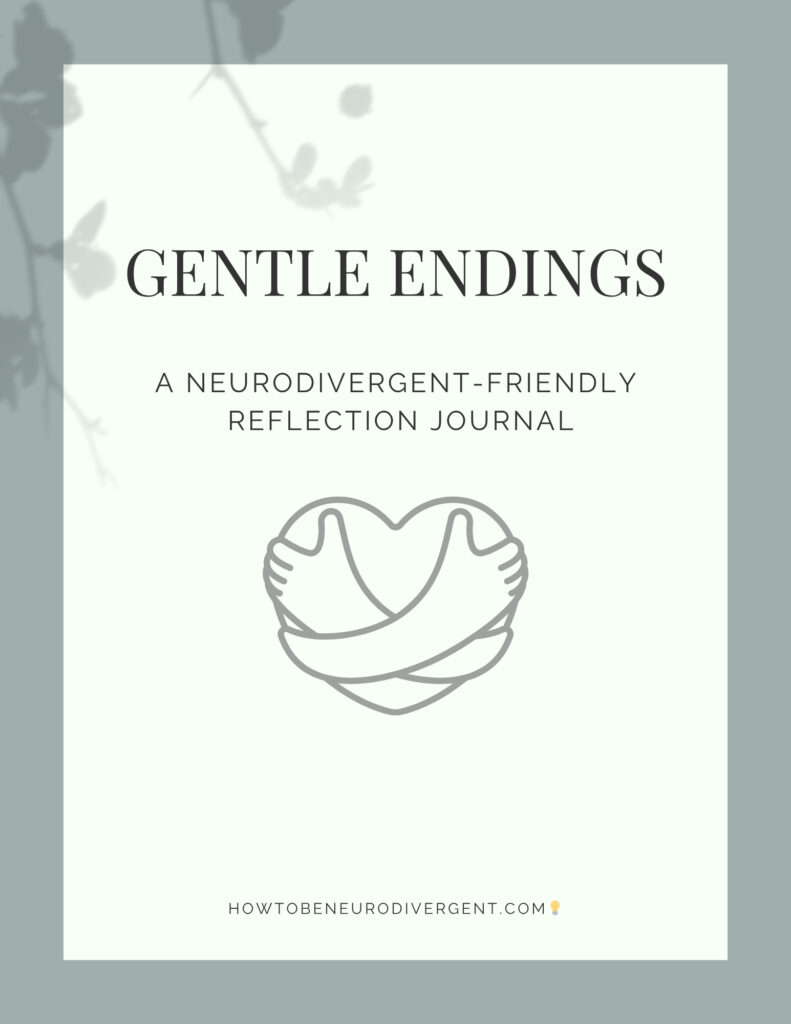
My Neurodivergent-Friendly Reflection Journal is my free December resource, designed specifically for neurodivergent thinkers. It offers soft guidance and gentle prompts so you can look back on your year in a way that actually feels supportive to your nervous system.
If you’d like a reflection tool that honors the way your brain processes the world, you can grab it here.
If you enjoyed this post, you might like this one 👉Nervous System Support: Rest is Not Lazy
Thanks for listening, friends.

Disclaimer:
This post reflects my personal experiences and perspectives as a late-identified neurodivergent adult. While I aim to share helpful insights, I don’t speak on behalf of the entire ADHD or autistic community. Neurodivergence is diverse and individual—please interpret this content through the lens of your own needs and experiences. This article is not a substitute for professional or medical advice.