



For many neurodivergent adults, the idea of “reflecting on the past year” doesn’t feel thoughtful or grounding. It feels dangerous.
One open-ended question can turn into hours of mental replay. A single regret can spiral into a full inventory of everything that went wrong. And instead of clarity, reflection leaves you feeling heavy, ashamed, or emotionally exhausted.
If that’s been your experience, you’re not doing reflection wrong.
What’s happening is something very common for neurodivergent adults: rumination.
This post is about understanding the difference between rumination vs. reflection, and how to approach neurodivergent reflection in a way that doesn’t trigger self-blame, perfectionism, or emotional spirals.
Table of Contents
ToggleWhy Reflection So Often Turns Into Rumination for Neurodivergent Adults
Reflection is usually presented as a neutral, even helpful practice. But for many late-diagnosed autistic and ADHD adults, reflection activates cognitive patterns that are very hard to turn off.
Neurodivergent brains are often wired for:
- Pattern recognition (seeing connections others miss
- Error detection (noticing what didn’t work)
- Rule-based thinking (believing there is a “correct” way to do things)
- Strong internal standards (often shaped by years of masking or unmet expectations)
When we look back at the past year, these strengths intensify.
The brain starts scanning for:
- Where things went wrong
- What should have been done differently
- Which patterns “prove” a personal failing
Instead of reflection, the mind shifts into problem-solving mode, trying to fix the past to prevent future pain.
That’s rumination.
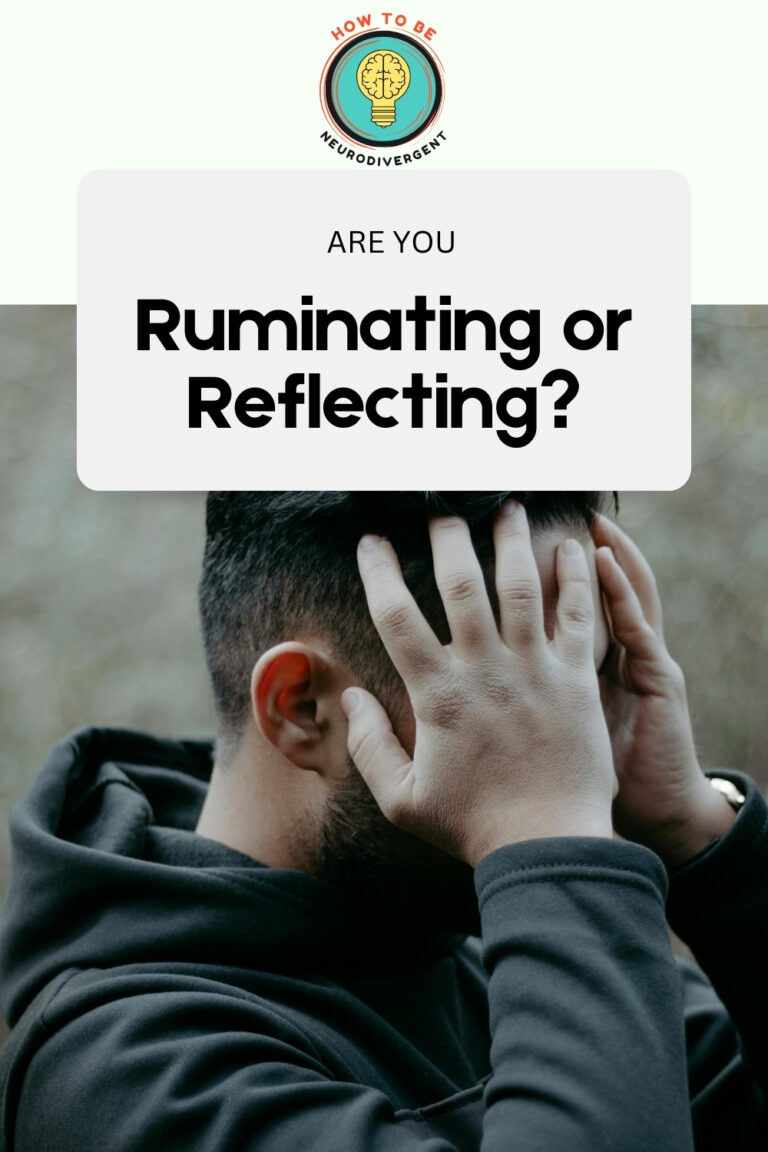
Rumination vs. Reflection: What's the Difference
Understanding the distinction is key to neurodivergent-friendly reflection.
Rumination:
- Is looping and repetitive
- Feels urgent or compulsive
- Fixates on mistakes, missed opportunities, or “failures”
- Rarely leads to resolution
- Leaves you dysregulated, ashamed, or stuck
Rumination often sounds like:
- “Why didn’t I handle that better?”
- “I always do this wrong.”
- “If I had just tried harder…”
Reflection:
- Has structure and boundaries
- Is time-limited
- Allows for context and compassion
- Leads to understanding, not self-punishment
- Feels contained, even if emotions come up
Reflection sounds more like:
- “What was actually happening for me at the the time?”
- “what did this season require of me?”
- “What information did I not have then that I have now?”
The problem isn’t that neurodivergent adults reflect too much.
It’s that we’re often asked to reflect without safeguards.
Why Open-Ended Reflection Questions Can Be Harmful
Many common reflection prompts unintentionally invite rumination, especially for neurodivergent adults:
- “What were your biggest failures this year?”
- “Why didn’t you follow through?”
- “What habits did you fall short on?”
These questions assume:
- You had equal access to energy, executive function, and support
- There was a single “right” way to do the year
- The past is something you can optimize rather than something you might need to contextualize
For neurodivergent adults (especially those navigating burnout, late diagnosis, or chronic overwhelm) these prompts encourage retroactive self-judgment rather than insight.

A Neurodivergent-Friendly Approach to Reflection
Neurodivergent reflection may benefit from being contained, compassionate, and optional.
Here are a few guiding principles that make reflection safer:
1. Contain the Time
Reflection without limits invites rumination.
Try:
- One question at a time
- A set time boundary (5-10 minutes)
- Writing instead of thinking (to stop looping)
When time is up, you stop. Even if the answer feels unfinished.
2. Replace “Why” With “What”
“Why” questions often trigger shame spirals.
Gentler alternatives:
- “What was hard about this season?”
- “What support was missing?”
- “What patterns were shaped by burnout or capacity? (not character!)”
This keeps reflection informational, not accusatory.
3. Include Context Every Time
Neurodivergent reflection may benefit from including:
- Energy levels
- Executive function capacity
- Mental health
- Life circumstances
- Whether you were masking, burned out, or undiagnosed
Without context, reflection becomes self-blame.
4. Know When to Pause
If reflection consistently leads to:
- Emotional flooding
- Shutdown
- Hours of looping thoughts
That’s a sign your nervous system needs regulation before reflection. Don’t push through.
Sometimes the most neurodivergent-friendly choice is to not reflect yet.
Reflection is Not a Moral Requirement
You are not failing at growth if you don’t do a deep year-end review.
For neurodivergent adults, especially those healing from burnout or shame cycles, reflection should feel supportive. The goal of neurodivergent reflection is to look back without hurting yourself.
A Gentle Next Step
If you want support that’s structured, contained, and designed specifically to prevent rumination, I’ve created a short neurodivergent-friendly reflection journal that guides you with gentle prompts.
It’s there when you’re ready👇. And if you’re not ready yet, that’s okay too.
If you enjoyed this post, you might like this one 👉 Why “Starting Fresh” Feels Harder for Neurodivergent Adults.
Thanks for listening, friends.

Disclaimer:
This post reflects my personal experiences and perspectives as a late-identified neurodivergent adult. While I aim to share helpful insights, I don’t speak on behalf of the entire ADHD or autistic community. Neurodivergence is diverse and individual—please interpret this content through the lens of your own needs and experiences. This article is not a substitute for professional or medical advice.