


“Just talk about it.”
It sounds simple. Reasonable, even. And yet, for many neurodivergent adults, this advice lands somewhere between unhelpful and deeply invalidating.
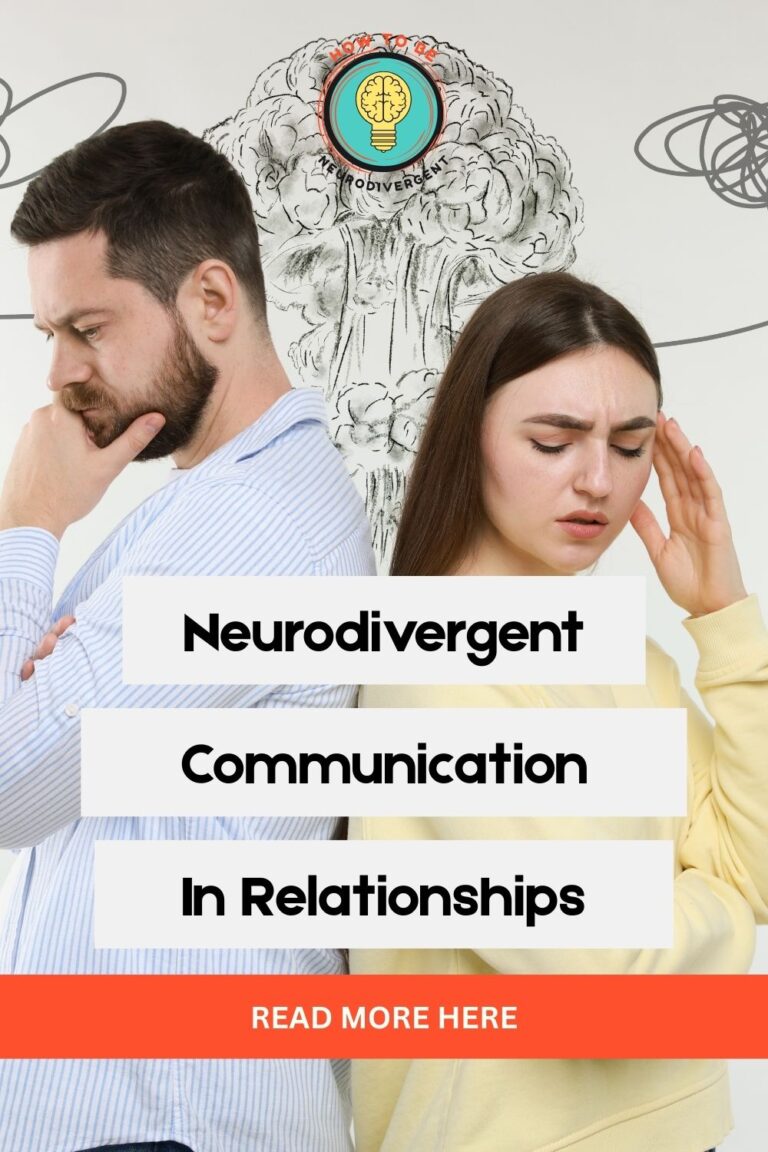
If you’ve ever left a conversation feeling misunderstood, overwhelmed, or somehow worse for having tried to communicate, you’re not failing at relationships. You’re likely running up against the very real realities of neurodivergent communication in relationships. These realities are often ignored in mainstream relationship relationship advice.
Let’s talk about why “just talk about it” doesn’t work for many neurodivergent people, and what does help instead.
Table of Contents
ToggleWhy "Just Talk About It" Is So Often Unworkable
Most relationship advice assumes a neurotypical communication baseline: quick emotional access, verbal processing, shared social expectation, and low cognitive cost for conversation.
That assumption breaks down quickly when we’re talking about neurodivergent communication in relationships.
For autistic, ADHD, AuDHD, and otherwise neurodivergent adults, communication may be impacted by:
- Delayed emotional processing (you don’t know how you feel yet)
- Alexithymia (difficulty identifying or describing internal states)
- Auditory processing differences
- High emotional or sensory load during conflict
- Literal interpretation of language
- Difficulty with unspoken social rules
So when someone says “just talk about it,” what they often mean is:
Access your emotions quickly, translate them into words in real time, manage your nervous system, read subtext, and respond calmly…all at once!
The Hidden Cost of Verbal Processing
Many neurodivergent adults process internally before they can speak. That processing may take hours, days, or longer.
In relationships, this can look like:
- Freezing during emotional conversations
- Going blank when asked “What’s wrong?”
- Needing space after conflict instead of resolution right now
- Feeling articulate later, but not in the moment
This isn’t avoidance. It’s how nervous systems regulate.
Yet in many relationships, especially those shaped by neurotypical norms, silence is interpreted as:
- Not caring
- Withholding
- Stonewalling
Which creates tension, shame, and pressure. This makes communication even harder!
This cycle is incredibly common in neurodivergent communication in relationships, and it’s rarely acknowledged.
Why Misunderstandings Happen So Easily
Another challenge in neurodivergent communication in relationships is that intent and impact often get misaligned.
For example:
- Directness may be interpreted as bluntness or criticism
- Neutral tone may be read as cold or dismissive
- Needing clarity may be misread as arguing
- Asking follow-up questions may be seen as defensiveness
Without shared understanding of neurodivergent communication styles, both people can walk away feeling hurt, confused, or unseen.
And often, the neurodivergent partner ends up doing most of the emotional labor to “translate” themselves.
What Helps Instead of "Just Talk About It"
If “just talk about it” doesn’t work, what does?
1. Decouple Communication From Immediate Emotion
Some conversations go better after regulation. Writing things down, voice notes, or scheduled check-ins can reduce pressure.
2. Normalize Processing Time
Needing time is not rejection. It’s part of sustainable neurodivergent communication in relationships.
3. Use Explicit Agreements
Clear expectations around conflict, pauses, and follow-ups prevent misinterpretation.
4. Focus on Understanding, Not Performance
Communication isn’t about saying the “right” thing. It’s about being understood eventually, in a way that feels safe.
5. Respect Different Communication Modalities
Text, shared notes, or visual supports aren’t inferior. They’re often more accessible.

This Isn't a Personal Failure
If communication has been a recurring struggle in your relationships, it’s easy to internalize the idea that you’re “bad at relationships” or “too much” or “not trying hard enough.”
But many of these struggles aren’t individual shortcomings. They’re the predictable result of applying neurotypical communication standards to neurodivergent nervous systems.
Neurodivergent communication in relationships requires different scaffolding, not more effort.
A Gentle Reframe
Instead of asking:
“Why can’t we just talk about it?”
Try asking:
“What conditions help you communicate best?”
That single shift can change the entire dynamic.
You Don't Have to Figure This Out Alone
If this post resonated, you’re not alone. And you’re not broken.
At HowtoBeNeurodivergent.com, I share grounded neuro-affirming insights about communication, relationships, late diagnosis, and living fully as a neurodivergent adult.
If you’d like thoughtful reflections, practical tools, and support delivered to your inbox, I invite you to join my newsletter, How to Be ND.
No pressure. No fixing. Just understanding, clarity, and connection at a pace that respects your nervous system.
👇You can sign up below and be part of a community that gets it.
If you enjoyed this post, you might like this one 👉Alexithymia in Autistic and ADHD Adults and How to Support It
Thanks for listening, friends.

Disclaimer:
This post reflects my personal experiences and perspectives as a late-identified neurodivergent adult. While I aim to share helpful insights, I don’t speak on behalf of the entire ADHD or autistic community. Neurodivergence is diverse and individual—please interpret this content through the lens of your own needs and experiences. This article is not a substitute for professional or medical advice.